
Cheap meals while traveling can be delicious, memorable, and deeply connected to the place you are visiting. The problem is that many travelers confuse affordable food with boring food. In reality, some of the best meals happen at markets, bakeries, casual counters, food stalls, grocery picnics, and local lunch spots. These meals can reveal culture in a relaxed way. They also leave room in the budget for special experiences. Travelers only need a better way to spot value. A helpful low-cost travel dining strategy can make inexpensive food feel intentional.
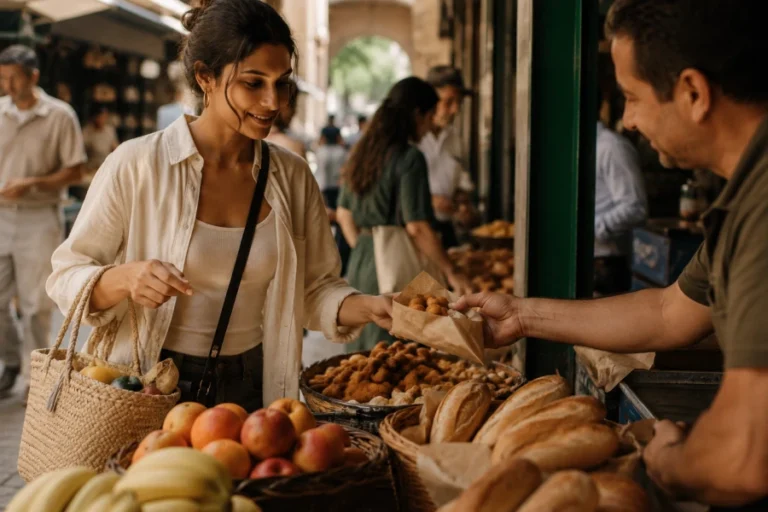
Affordable meals often happen where daily life happens. Locals buy pastries before work. Students gather at casual counters. Families pick up prepared food from neighborhood shops. These places may not look polished, but they can feel honest and memorable. Travelers who only choose formal restaurants miss that texture. Cheap does not have to mean careless. It can mean simple, fresh, fast, and rooted in routine. This is why affordable meals often create strong memories. They show how a destination eats on ordinary days. That ordinary rhythm can be more revealing than a staged dining experience.
Saving money on everyday meals makes special meals feel easier to enjoy. If breakfast and lunch stay simple, dinner can become more flexible. If snacks come from markets, one memorable dessert feels more reasonable. This balance helps travelers avoid guilt. It also prevents the budget from disappearing through convenience. A travel food savings plan lets inexpensive meals and special meals work together. The result feels richer, not smaller. You spend where the experience truly matters and simplify where it does not.
Grocery stores can be surprisingly fun abroad or even in a new region. Shelves reveal local snacks, drinks, breakfast habits, and everyday flavors. Travelers can build easy meals from fruit, bread, cheese, salads, prepared foods, or regional treats. This works especially well for road trips, apartment stays, and hotel rooms with small fridges. A grocery meal can become a picnic, train snack, or relaxed balcony dinner. It also reduces restaurant fatigue. Not every meal needs service, menus, and waiting. Sometimes the easiest meal becomes the one that feels most connected to the trip.
Affordable eating should still support energy. Travelers need meals that keep them moving, especially on active days. Look for protein, produce, water, and satisfying portions. Bakeries are wonderful, but pastries alone rarely carry a full sightseeing schedule. Add fruit, yogurt, eggs, soup, sandwiches, or simple local dishes when possible. A balanced cheap meal prevents extra snacking later. It also keeps mood steady. For practical planning, affordable meals on vacation can help travelers think beyond the cheapest visible option.
Convenience food is not always bad. It becomes expensive when travelers choose it repeatedly without noticing. Train stations, airports, attraction exits, and hotel zones often charge more for average food. The solution is awareness. Buy snacks before long transit days. Check nearby streets before eating beside major landmarks. Keep one emergency option in your bag. These small habits prevent overpaying when energy drops. They also help travelers stay patient enough to find better food. A little preparation creates better choices. The trip feels calmer because hunger no longer controls the budget.
There is satisfaction in eating well for less. It makes travelers feel resourceful, curious, and connected to local life. It also makes the journey last longer financially. The money saved can support another activity, a better room, or a future trip. Affordable meals should not feel like a downgrade. They should feel like part of the travel skill set. When travelers learn where value lives, every destination becomes easier to enjoy. Food remains generous. The budget stays steady. The best inexpensive meal may not look fancy, but it can become the moment everyone remembers.


Leave a comment