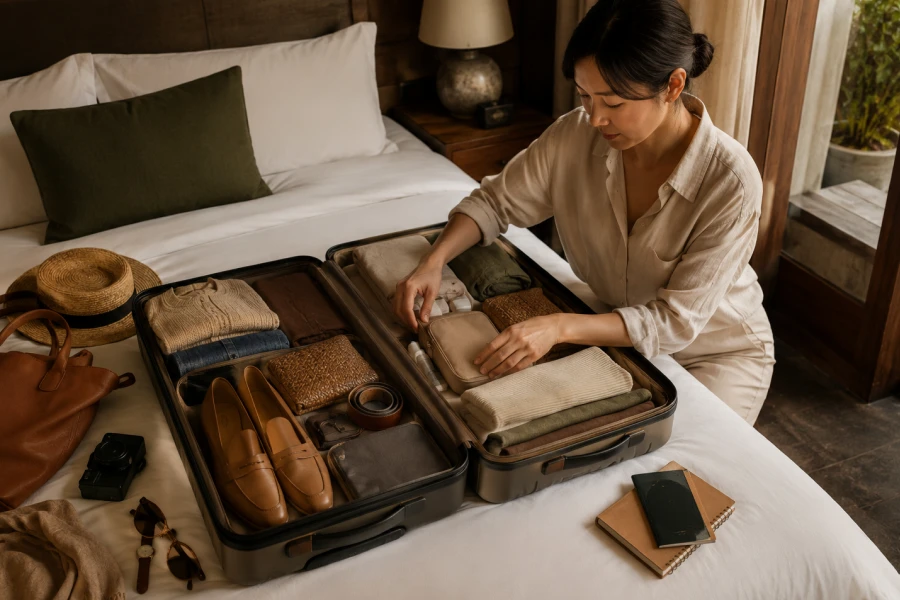
Travel packing list habits can turn a stressful departure into a cleaner, calmer process. Many travelers overpack because they are not sure what the trip will demand. They add extra outfits, backup toiletries, duplicate chargers, and random just-in-case items. Then the suitcase becomes heavy before the journey begins. A better system starts with the real shape of the trip. Consider weather, activities, laundry access, luggage limits, and your daily routine. That turns packing into a decision process, not a last-minute panic. A smart vacation packing planner helps travelers create order before clothes hit the bed.
Overpacking usually begins with uncertainty. People pack for imaginary situations instead of likely ones. They prepare for every dinner, every weather shift, and every possible mood. A structured list creates boundaries. It makes each item justify its place. That does not mean packing becomes strict or joyless. It becomes more thoughtful. You can still bring something stylish, comfortable, or personal. The difference is intention. Every item supports the trip. Nothing travels only because anxiety placed it there. Once travelers feel that control, packing becomes faster. The suitcase also feels easier to manage from the first airport step.
A list works best when it follows your actual days. A beach weekend needs different choices than a museum-heavy city break. A road trip needs different organization than a carry-on flight. Start with the itinerary, then build categories around it. Clothes, shoes, documents, toiletries, electronics, comfort items, and transit essentials all need separate attention. This method keeps packing realistic. It also reveals gaps early. If your route includes walking, shoes matter more than extra outfits. If your stay includes laundry, fewer pieces can work harder. A minimalist packing list can make that process feel practical.
The easiest suitcase is built around repeatable outfits. Choose colors that work together. Select layers that shift between morning, afternoon, and evening. Pack shoes that support your actual walking plans. Avoid pieces that only match one outfit. This approach creates more options with fewer items. It also reduces the daily friction of getting dressed away from home. Travelers often underestimate how much repetition works on vacation. Photos, lighting, accessories, and settings create variety. Clothes do not need to do all the work. A tighter wardrobe helps you move faster and feel more organized throughout the journey.
Carry-on packing rewards clarity. Space is limited, so every choice matters. Keep liquids simple. Choose compact toiletries. Place documents where you can reach them quickly. Put chargers, medication, and one useful layer near the top. Build your bag around the first twenty-four hours. That way, delays or schedule changes feel less disruptive. A carry-on should protect your comfort, not just hold your clothing. This is where carry-on organization essentials become more valuable than extra outfits. When the bag opens easily, the whole trip starts better.
Every suitcase contains two categories. Some items are necessary. Others are comforting, stylish, or convenient. The problem appears when travelers treat both groups equally. A cleaner packing process separates them early. Necessary items include documents, medication, weather-appropriate clothing, chargers, and core toiletries. Nice-to-haves can stay, but only after essentials fit. This protects space without removing personality. You can still bring a favorite scarf, camera, or book substitute. The goal is not minimalism for its own sake. The goal is usefulness. A suitcase should support your movement, your comfort, and your plans without becoming another travel burden.
Good packing also improves the return. Organized travelers unpack faster because they know what they brought. Dirty laundry stays separate. Toiletries return to their places. Documents do not disappear into random pockets. This ending matters more than people think. A trip feels better when it does not create chaos afterward. The same list can also become a reusable system. You adjust it after each journey. You remove what stayed unused. You add what would have helped. Over time, packing becomes more personal and precise. The best system is not perfect on day one. It improves every time you travel.




Leave a comment